Pull up Villa Park's median home price on two different days and you can get two numbers that don't agree with each other by half a million dollars. One tally puts the city's typical sale at about $2.05 million through the first half of 2026. Another, covering December 2025, just months earlier, puts it at $2.6 million. Both are accurate. Neither is wrong. That gap is the story, and it matters more to anyone actually pricing a Villa Park home than the number itself.
Most Orange County cities don't do this. Yorba Linda's median moves in tight, boring increments from month to month because enough homes change hands to smooth out the noise. Villa Park doesn't have that luxury, and understanding why changes how you should use any price you find for this city.
The math behind the whiplash
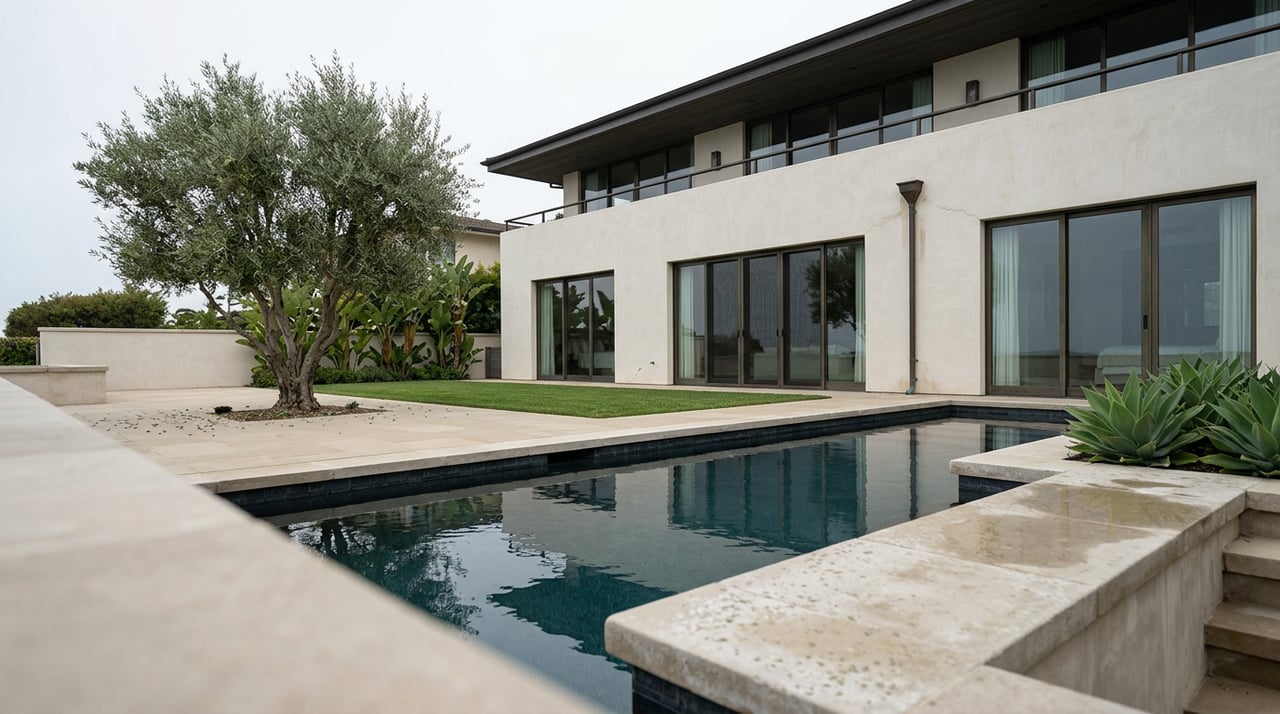
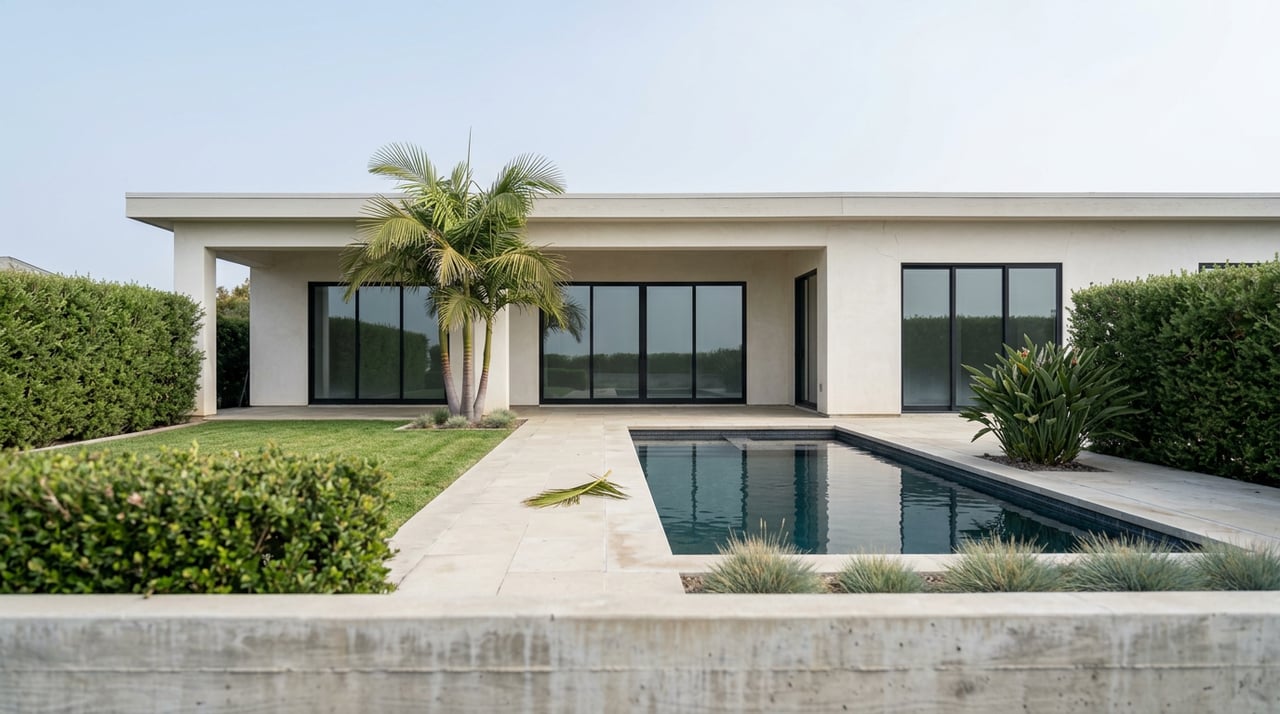
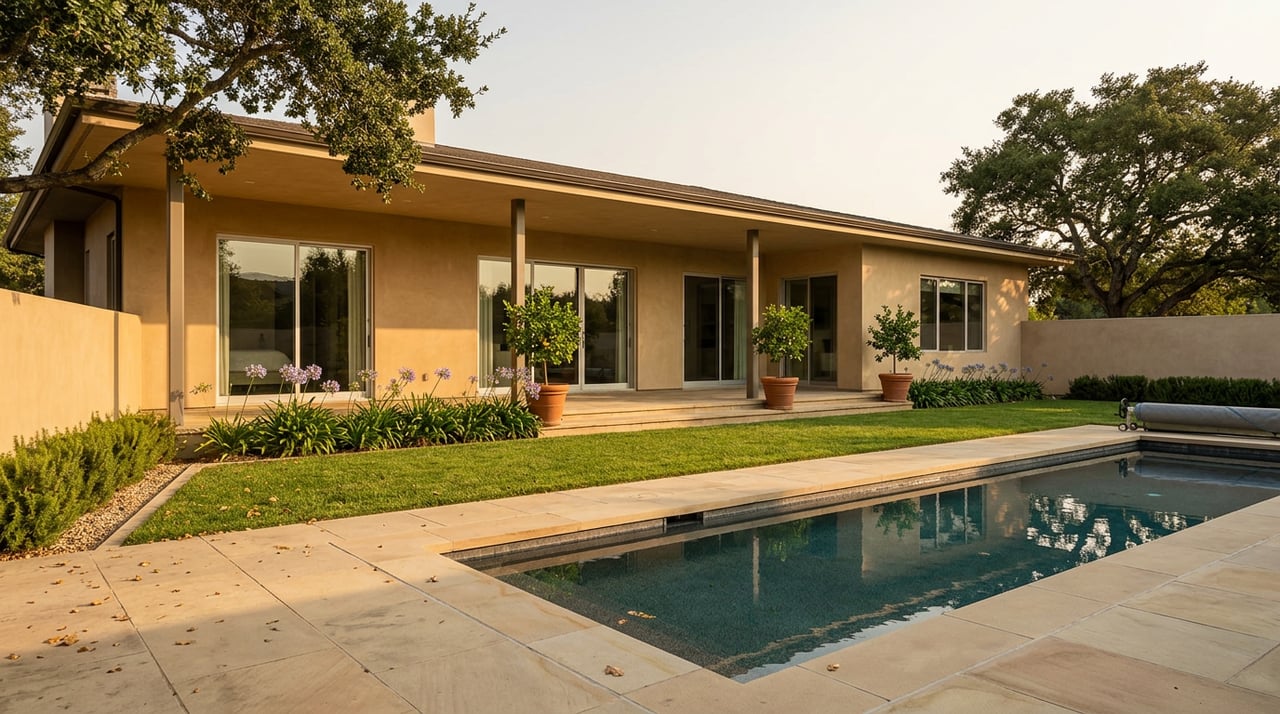
Villa Park incorporated in 1962 and wrote a half-acre minimum lot size into its zoning from day one. Most of the city still requires a net lot area of 20,000 square feet, roughly a half acre, for a single-family home. A narrow transitional strip on the west side allows smaller parcels down to 8,000 square feet, but the overwhelming majority of the roughly 2,050 homes in the city sit on that half-acre minimum or larger. There is no multi-family zoning, no condo stock to speak of, and outside of one or two older subdivisions like Villa Park Orchards, no HOA or Mello-Roos assessments layered on top.
That combination is exactly what residents like about living here, and it's exactly what makes the median unreliable as a pricing tool. A city that caps its own housing stock at just over two thousand homes and adds almost nothing to it each year is going to sell very few of them in any given month. As of early September 2026, Redfin's own tracking showed just five closed sales in Villa Park over the trailing thirty days. Compare that to Yorba Linda, which closed 175 sales in a single month as of May 2026. When your sample size is five, one $4 million estate closing next to two $1.6 million fixer-uppers swings the median by hundreds of thousands of dollars, and it will do it again the next month in the opposite direction.
What the numbers actually look like side by side
| City | Approx. median sale price, H1 2026 | Avg. days on market | Rough monthly closed sales |
|---|---|---|---|
| Villa Park | ~$2.05M | 41 | 3 to 8 |
| Yorba Linda | ~$1.62M | 28 | 150 to 175 |
| Anaheim Hills | ~$1.45M | 24 | 100+ |
The price gap between Villa Park and its neighbors is real and it reflects genuine differences in lot size and privacy. The days-on-market gap tells a second story. Villa Park homes sit longer not because demand is weak but because there are so few of them that the right buyer and the right house have to find each other, which takes time in a market this small. A 41-day average sounds unremarkable until you realize it's built from a dozen or so transactions a year rather than hundreds.
A real sale, not an abstraction
Public sale records tell the story better than any aggregate. A five-bedroom, four-bathroom home on Fleet Road closed on January 16, 2026 for $2,950,000. It offered 4,067 square feet, had originally listed at $2,999,888, and closed about two percent below asking after 72 days on the market. That single transaction, on its own, is a perfectly normal Villa Park sale. Drop it into a monthly median calculation with four or five other closings and it can single-handedly push the average price per square foot up or down by a noticeable margin. In a market with hundreds of comparable sales, one house barely moves the needle. Here, it can define the month.
Big lots invite renovation plans, and the ordinance underneath them just got corrected
Half-acre lots are exactly the kind of inventory that rewards a construction-literate buyer. There's room for additions, pools, guest structures, and increasingly, accessory dwelling units. Villa Park adopted its own ADU ordinance, Ordinance No. 2023-630, in December 2023 to govern exactly this kind of project.
The state's Department of Housing and Community Development reviewed that ordinance and issued formal findings in December 2024 concluding that several sections conflicted with state ADU and junior ADU law. Among the problems flagged: the city's minimum unit size rule didn't account for a state provision requiring an 800-square-foot allowance when 50 percent of a small primary home falls below that threshold, and a height bonus for matching an ADU's roof pitch to the main house understated what state law actually permits by two feet. HCD gave the city 30 days to respond with corrections.
None of this means you can't build an ADU on a Villa Park lot. It means the local ordinance governing exactly how big, how tall, and under what conditions has been actively in flux, and a homeowner planning a project should confirm the current, corrected language with the city before penciling in square footage rather than relying on whatever version of the code shows up in an older search result. It's a small, specific example of the same lesson the price data teaches: in a market this idiosyncratic, the general rule of thumb is usually wrong for the specific parcel.
The housing stock itself refuses to be uniform
Part of why a single median can't represent Villa Park is that the homes themselves were never built to match. Cerro Villa Heights, in the city's northeast hills, started as citrus and orange-grove ranchland the Bixby Company sold off in ten to fifteen acre parcels. Those ranches were eventually broken up again into the half-acre and one-acre homesites that make up the neighborhood today, which is why a property there can trace back to three completely different eras of subdivision on the same street. A few blocks over, the Villa Park Orchards Association traces back to 1912 and still marks the site of the old Sunkist packing house that once processed the citrus this area was named for. Martinique Court, a 16-home luxury development built in 1999 off Lemon Street, sits on what used to be the last large single parcel in the city, a 10-acre estate once owned by singer Jose Feliciano before it was subdivided.
A city with that much variation in age, size, and provenance doesn't produce a housing stock where any two homes are close comps just because they're both in Villa Park. A mid-century ranch two streets from a fully custom 2004 estate isn't a comparable sale. It's a coincidence of geography.
What this means if you're the one pricing or offering
If you're selling in Villa Park, the headline median is close to useless as a starting point. What matters is finding the two or three homes that actually resemble yours in lot tier, era, and condition, and pricing off those, even if the last comparable sale closed four months ago rather than four weeks ago. If you're buying, the same logic applies in reverse. A home that looks expensive against the citywide median might be perfectly priced against its real peer group, and one that looks like a deal might be priced against a stale, unrelated comp.
The volume problem also means patience serves you here in a way it wouldn't in Yorba Linda or Anaheim Hills. Waiting an extra few weeks for the right listing, rather than reacting to whatever the current median implies about urgency, tends to be the better move in a market this thin.
A few questions worth settling before you act
Is Villa Park's market currently rising or falling? Both, depending on which window you look at and which handful of sales landed in it. The more useful question is what specific comparable homes have sold recently, not what direction a citywide average moved.
Can I still build an ADU on a Villa Park lot right now? Yes, but confirm the current version of the city's ordinance with Villa Park's planning department before finalizing square footage or height, since the version adopted in December 2023 needed state-mandated corrections as of late 2024.
How does Villa Park's lot size actually compare to Yorba Linda's? Villa Park's half-acre zoning minimum, in place since 1962, puts most lots at 20,000 square feet or larger. Yorba Linda's newer master-planned neighborhoods like Eastlake Village and Travis Ranch typically run smaller, generally in the 8,000 to 15,000 square foot range.
If you're weighing a move into Villa Park, or you're sitting on one of its half-acre lots and wondering what a renovation or an ADU could actually add, the Teicheira Team can walk the real comps and the current code with you before you commit to a number. Request a home valuation or a renovation-focused consultation and get a read on your specific property, not the citywide average.